Big Bend Border Construction and a Chance to SPEAK OUT Against it!

June 22, 2026

As I start to pack up for my section hike this year, I want to post a quick plea in a departure from my regular hiking adventure posts. Many of you may have heard of the move towards the horrifying construction in and around Big Bend National Park. As a public lands advocate and native Texan, this hits close to home. Link below to a quick overview of the proposed (and already starting) project.

https://storymaps.arcgis.com/stories/7b9dcd3f418b4086988532ace99a4bfc

Background:

U.S. Customs and Border Protection (CBP) is planning to construct vehicle barrier system and roads in Brewster County, Texas, including areas in and around Big Bend National Park and Big Bend State Park. On June 9, 2026, the Secretary of the Department of Homeland Security (DHS) issued a waiver covering certain laws, regulations, and other legal requirements to ensure the expeditious construction of barriers and roads.

Please read, share, and submit your comments a way to exercise our rights as American citizens and protect the land that we collectively own. I’ve probably posted this quote before, but it rings so true and is something we should never forget.

From Dayton Duncan, the main writer of the Ken Burns National Parks documentary:

“At the heart of the national parks idea is this: By virtue of being an American, whether your ancestors came over on the Mayflower, or whether they just arrived, whether your daddy owns the factory, or your mother is a maid, you, YOU are the owner of some of the best seafront property this country’s got. You own spectacular views of mountains and waterfalls. You own amazing canyons and vistas. They belong to YOU. They’re YOURS. And all that’s asked of you is that you put it in your will, for your children, so that they can have it too. Hopefully you won’t let it be despoiled. Hopefully you won’t let it be sold off. Hopefully you’ll provide for proper maintenance of this property that is yours, but that’s all you have to do…now, that’s quite a bargain.” 

Here’s the article from Marfa Public Radio, instructions for submitting comments, and what I sent.  Use mine as a template, or just copy and paste it, I don’t care. Use your voice to fight back!

https://www.marfapublicradio.org/news/2026-06-22/former-big-bend-superintendents-sound-alarm-about-widespread-border-construction-plans-in-the-national-park

How to Submit Comments:

CBP will be accepting comments until July 13, 2026. Comments can be emailed to CBP at BigBendComments@cbp.dhs.gov Please include “Brewster County Vehicle Barrier System Construction” in the subject of your email. Comments received in response to this letter, including names and addresses of those who comment, will become part of the public record.

Helpful comments are fact-based, include links to data or research, and provide specific information concerning potential impacts to environment, culture, quality of life and commerce, including potential socioeconomic impacts. If known, your response should include any state and local restrictions, permitting or other requirements that CBP should consider during project siting, construction, and operation.

You may also provide comments, questions, or concerns by calling (833) 412-2056 or by mailing:

U.S. Customs and Border Protection Program Management Office Directorate 1300 Pennsylvania Ave. 6.5E Mail Stop 1039 Washington, D.C. 20229-1100 ATTN: Michelle Barnes

My letter:

To U.S. Customs and Border Protection:

I am writing as a native Texan to strongly oppose the proposed Brewster County Vehicle Barrier System Construction project in and around Big Bend National Park, including the planned vehicle barriers, patrol roads, detection infrastructure, lighting, bridges, staging areas, laydown yards, utility poles, utility shelters, and related construction activity.

Big Bend is one of the places that made me proud to be from Texas, and the idea of permanently scarring it for this project is unconscionable.

I support responsible and effective border security. This proposal is neither responsible nor justified. It is a massive industrial construction project in one of the most remote, ecologically important, culturally significant, and visually irreplaceable landscapes in the United States. The plan to construct approximately 17 non-contiguous miles of vehicle barrier system and approximately 205 miles of patrol roads, potentially up to 24 feet wide and equipped with detection technology, is wildly disproportionate to the documented level of border activity in the Big Bend Sector.

Big Bend National Park is not empty desert. It is not unused land. It is not a construction zone waiting to happen. It is a national park, a globally significant dark-sky landscape, a refuge for wildlife, a place of extraordinary cultural and archaeological significance, and an economic engine for Far West Texas communities. More importantly, it is public land. National Parks are the birthright of all Americans. This is our land, held in trust for the people, and no administration has the moral right to permanently scar it for an unnecessary and destructive project.

The proposed construction threatens everything that makes Big Bend sacred to Texans and treasured by Americans.

I am particularly concerned about the following impacts:

First, the scale of road construction is unacceptable. A 205-mile network of patrol roads, some potentially up to 24 feet wide, would permanently fragment desert habitat, scar viewsheds, increase erosion, alter drainage, and create long-term maintenance impacts. In steep and rugged areas such as canyon country, road construction could require major grading, retaining structures, drainage work, bridges, and possibly blasting or other destructive methods. This is not minor access work. It is an industrialization of a national park landscape.

Second, the proposal threatens Big Bend’s dark skies. The region’s darkness is not incidental; it is one of the park’s defining resources and a major reason people travel there. The proposed utility poles, luminaries, surveillance systems, shelters, and grid-powered infrastructure risk introducing artificial light into an area where darkness itself is a protected public value. Even shielded lighting, if placed across remote desert corridors, can degrade night skies, affect wildlife behavior, and diminish the visitor experience.

Third, the project risks damaging cultural and archaeological resources. Big Bend contains thousands of years of human history. Clearing land for roads, barriers, staging areas, laydown yards, utility shelters, drainage structures, and underground conduit creates a serious risk of disturbing archaeological sites and cultural landscapes. Waiving federal laws does not erase the federal government’s responsibility to protect these resources. It only makes the process more reckless.

Fourth, the proposal could damage water, soil, and drainage systems in a fragile desert environment. The project description references drainage gates, erosion-control structures, low-water crossings, ditches, riprap, water for construction, and dust suppression. That alone shows how much hydrology and soil disturbance this project could create. In a desert landscape, damage to drainage patterns, biological soil crusts, vegetation, and washes can last for decades.

Fifth, the project threatens the local economy and quality of life in Brewster County and the wider Big Bend region. Visitors come to Big Bend for wilderness, solitude, dark skies, scenic beauty, birding, hiking, river canyons, and an experience that feels unlike anywhere else in the country. Industrial infrastructure, construction scars, lighting, road cuts, towers, utility shelters, and staging yards would reduce the very qualities that support tourism, small businesses, guides, lodging operators, restaurants, outfitters, and local communities.

CBP should not treat Big Bend as a blank space on a map. It is a national park. It belongs to the American people. It should be protected for future generations, not sacrificed to rushed construction enabled by waivers of environmental, historic preservation, and public review laws.

I ask CBP to take the following actions:

  1. Fully withdraw the Brewster County Vehicle Barrier System Construction proposal.
  2. Do not construct new border barriers, patrol roads, utility corridors, lighting systems, surveillance towers, staging areas, laydown yards, bridges, or related industrial infrastructure in Big Bend National Park or surrounding protected public lands.
  3. Do not rely on legal waivers to bypass environmental review, historic preservation obligations, public accountability, or meaningful consultation with affected communities and Tribal nations.
  4. Publicly release all detailed maps, road alignments, staging locations, water sources, lighting plans, cultural resource surveys, biological surveys, hydrology analyses, and long-term maintenance plans related to this proposal.
  5. Provide a public explanation for why CBP is pursuing massive permanent infrastructure in a sector that reportedly accounts for only a very small share of overall border apprehensions.
  6. Permanently protect Big Bend National Park, Big Bend Ranch State Park, canyon country, riparian areas, cultural landscapes, dark-sky resources, wildlife habitat, archaeological sites, and high-value viewsheds from this construction.
  7. Pursue border security only through methods that do not permanently damage national park lands, public lands, cultural resources, wildlife habitat, desert hydrology, dark skies, or the visitor experience.

The American people can support border security without accepting the destruction of Big Bend National Park. This project is not necessary. It is not justified. It is not an acceptable tradeoff.

National Parks are the birthright of all Americans. Big Bend is our land. It belongs to the public, not to any one administration, agency, contractor, or political project.

This proposal should be fully withdrawn. Anything less would be an illegal and unacceptable assault on our public lands.

Sincerely,

[Your Name]
[City, State]
Permits and New Gear!

June 6, 2026

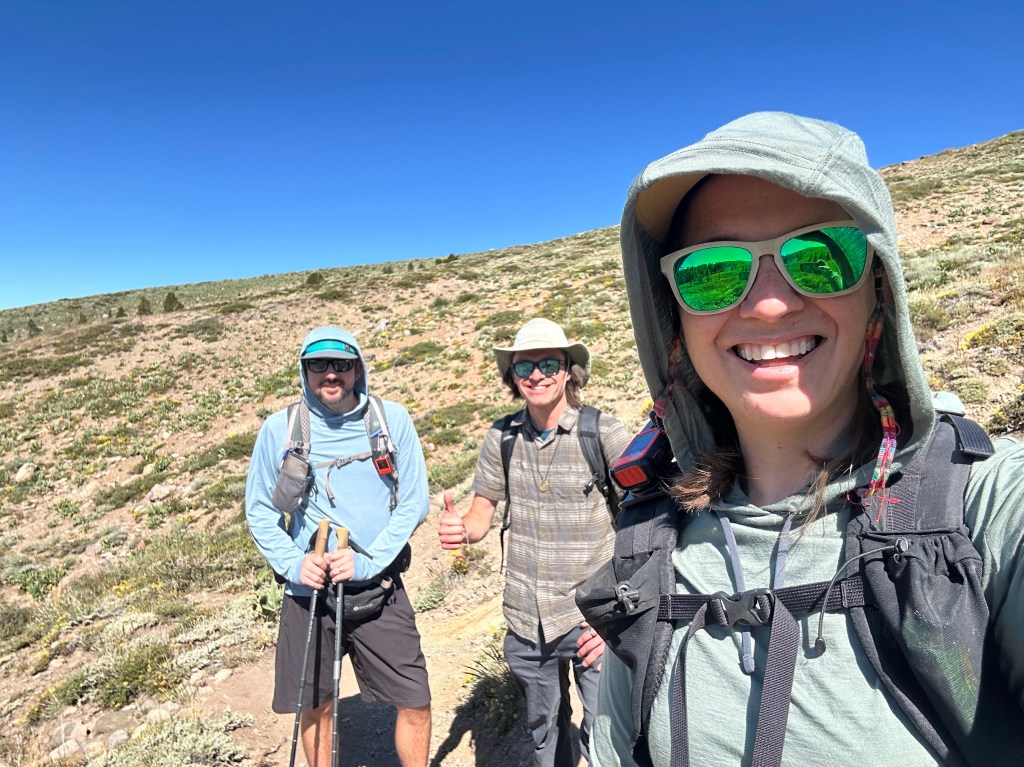
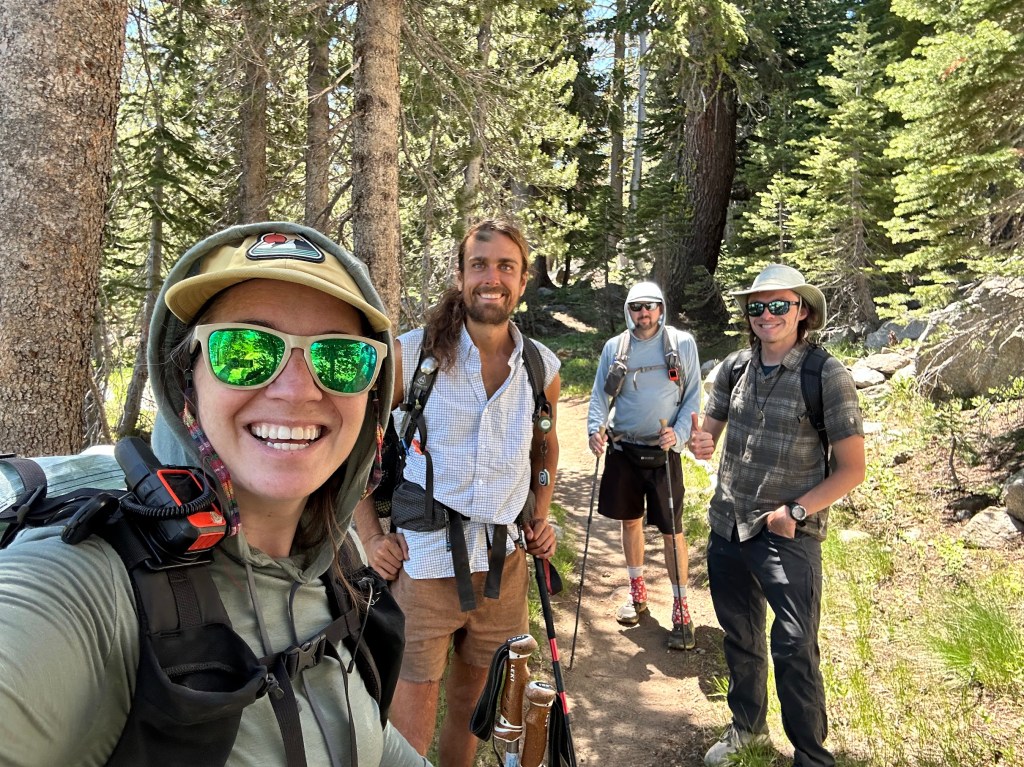
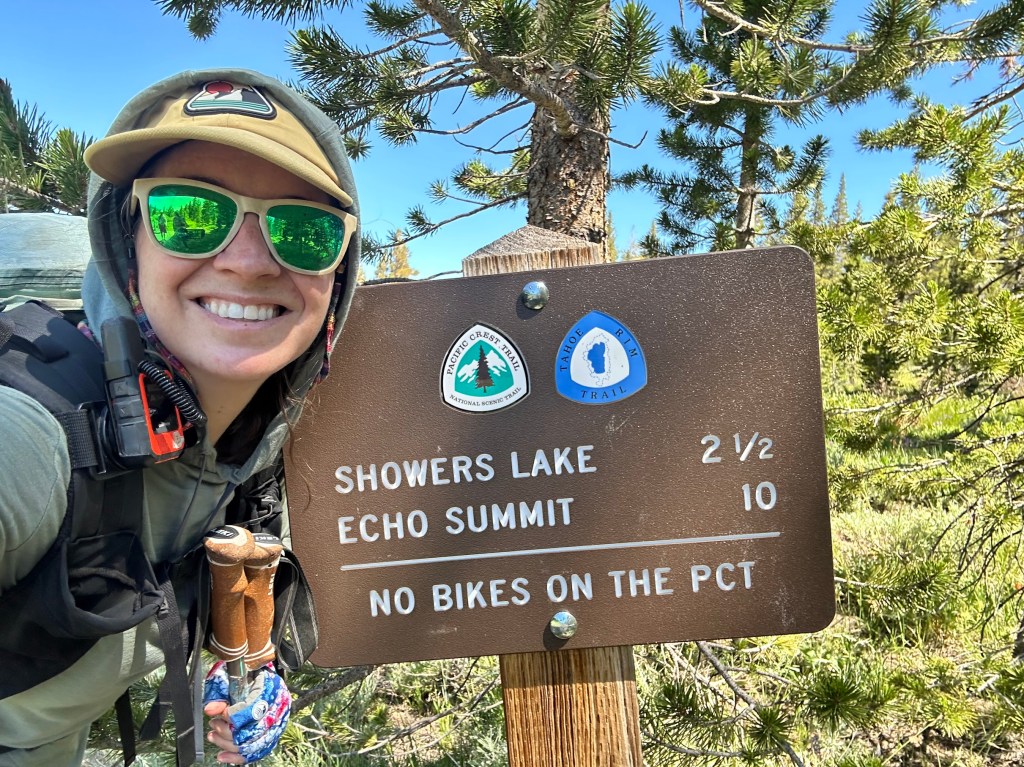
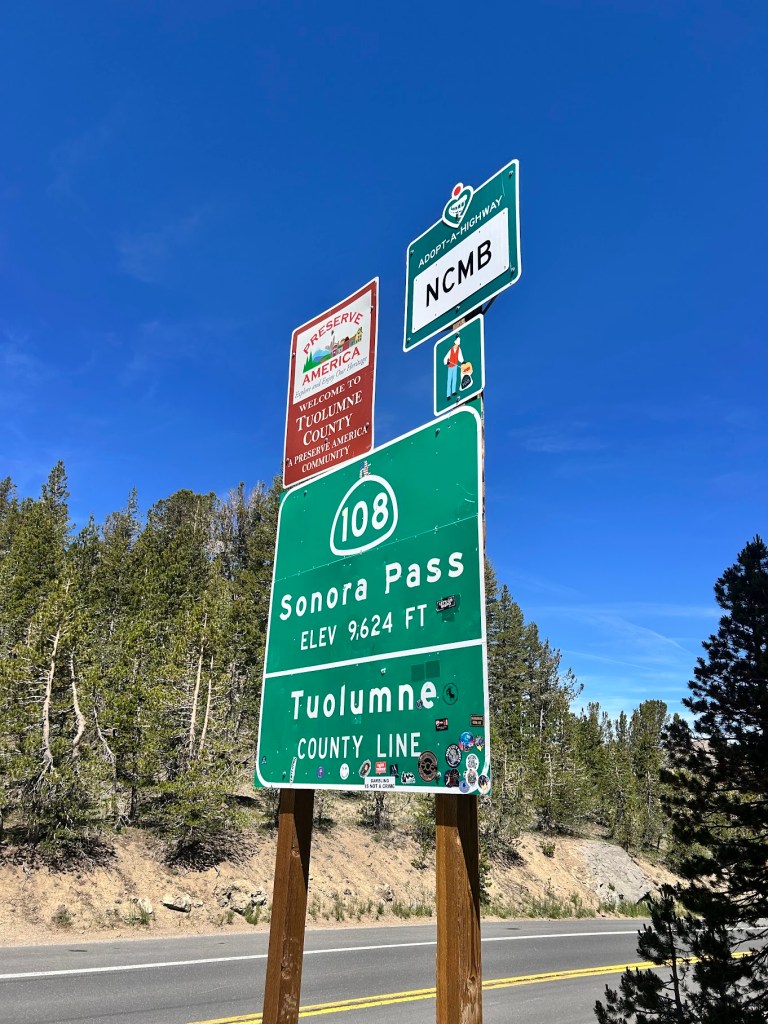
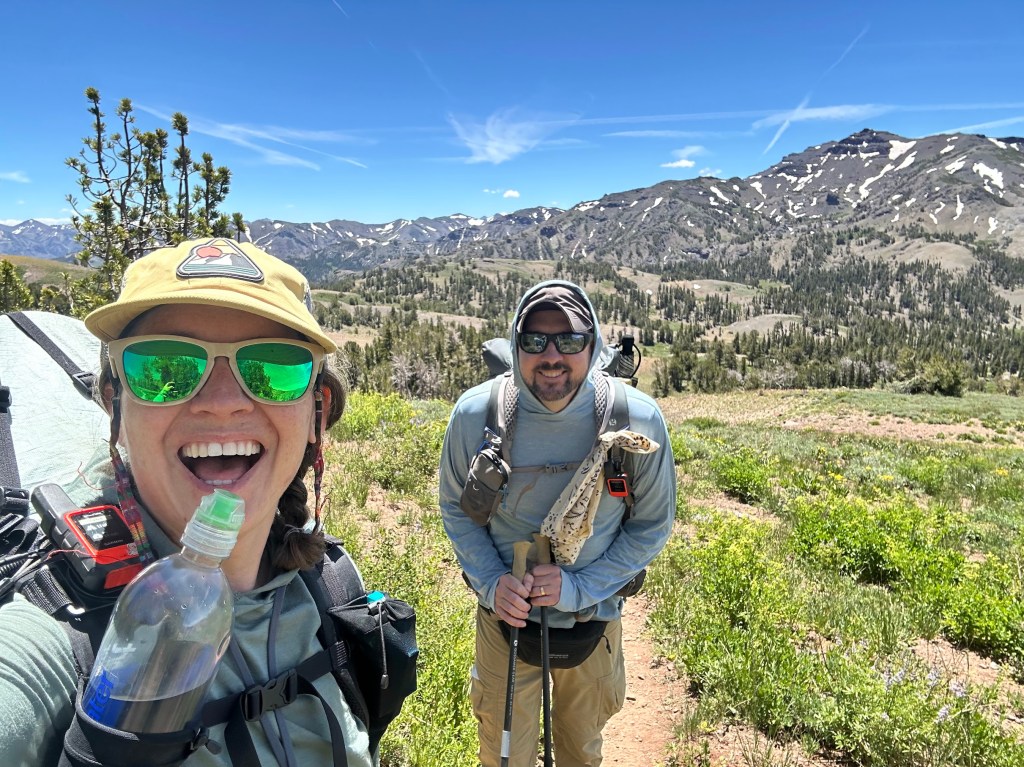
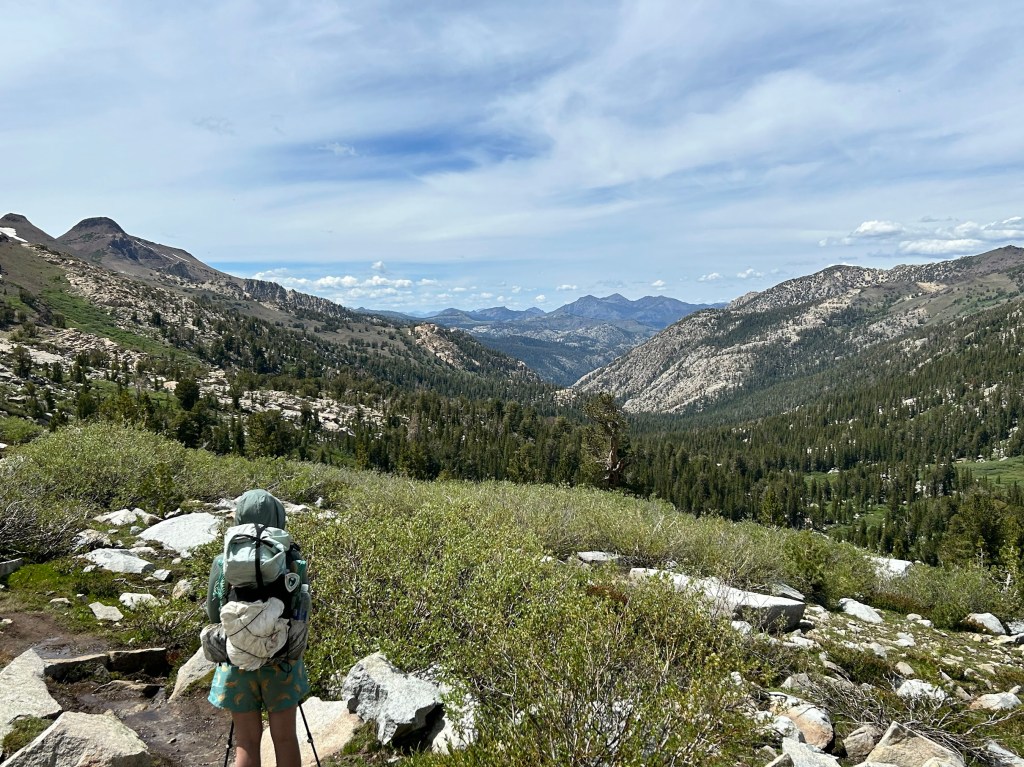
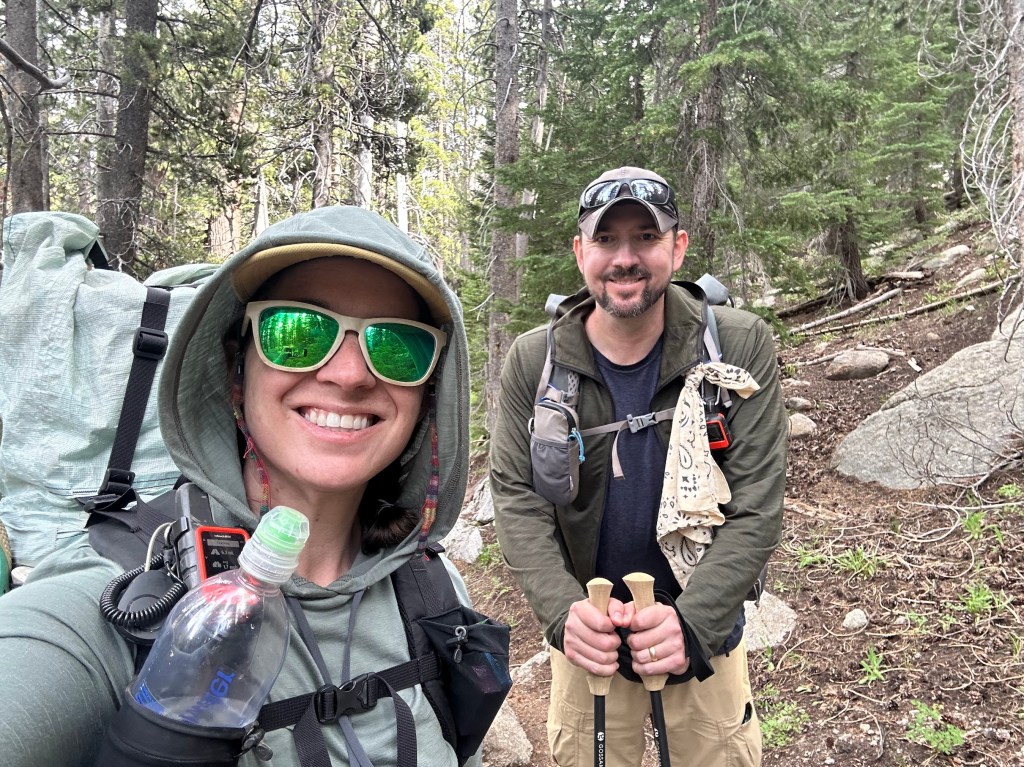
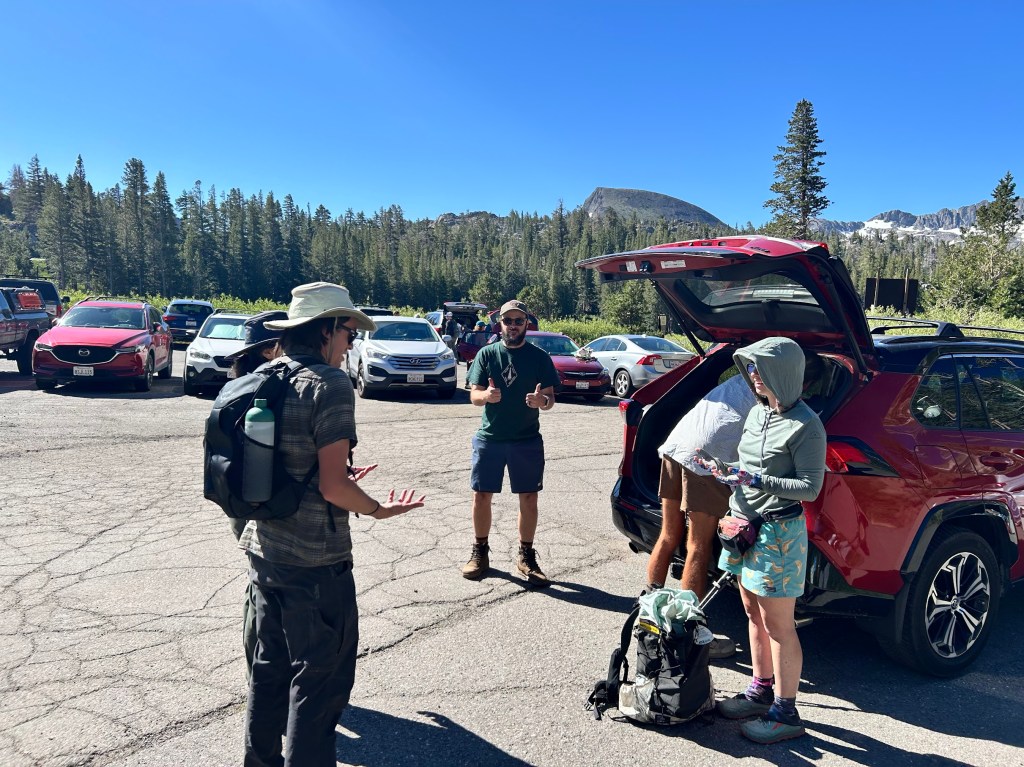
Everything is locked in! I got my PCT long distance permit starting July 1st. I am flying into Reno/Tahoe a couple of days early to adjust to the altitude and staying with Buffer and Shawn. Buffer and I will start at Sonora Pass and head northbound. Shawn is going to be our resupply and transportation trail angel. Another hiking buddy of hers (and now mine as well), Sluggy, is going to meet us a couple of days in. He is from England and is going to be on trail for about 45 days, so he’s going to continue going nobo when we get off.

I am planning on getting off at Echo Summit, 75 miles in, or if I’m feeling good, maybe continuing all the way up to Donner Ski Ranch, redoing the section I did in 2024 sobo. I am in the middle of training and trying to find the balance between over-prepping and under-prepping. My left hip was acting up again on a training hike the other day, so I’m going to really focus these next 3 weeks on stretching and proper exercises to strengthen my hip flexors. I think it is more the hip flexor than the IT band.

Also, new gear! We are going to take bear cans the whole way, though I don’t think it’s actually required until the Desolation Wilderness past Echo Summit. Will just be easier logistically and safer for the bears if we have our canisters the whole time. I have my bear can that I used in 2024, but Bear Vault has come out with a new ADJUSTABLE canister that I’m going to try out. It shrinks down when you have extra space so it takes up less room in your pack, which is the hardest part of hiking with a bear can.

Very excited this is all coming together and happy I get to hike with friends, old and new. I will post a couple of more times leading up to the hike and then have a day by day recap when it is all done.

Also, quick reminder that today is D-Day. 82 years ago, our forefathers stormed the beaches and skies over Normandy to start the liberation of Europe and fight the fascist forces that had taken hold. We would do good to remember those brave men and the reason they were fighting when we look at our current world today.

PIVOT

One of the main things you have to learn when joining the hiking community is that you have to roll with the punches. Unfortunately, my hiking buddy Stix decided the AT wasn’t for him this year, so he got off early and I’m not going to meet him up in Virginia anymore.

That’s ok. Plans change, people change, and you have to adjust. So I am now pushing my hike back this year to July and planning to meet up with another buddy from my 2024 PCT section hike on the west side of Lake Tahoe. I met Buffer in my trail maintenance class prior to my hike and she then picked me up at the other end at Echo Summit and I stayed in her spare room that she outfits specifically for hikers. Her and her boyfriend (fiancee?) Shawn are great people and I would love to see them again.

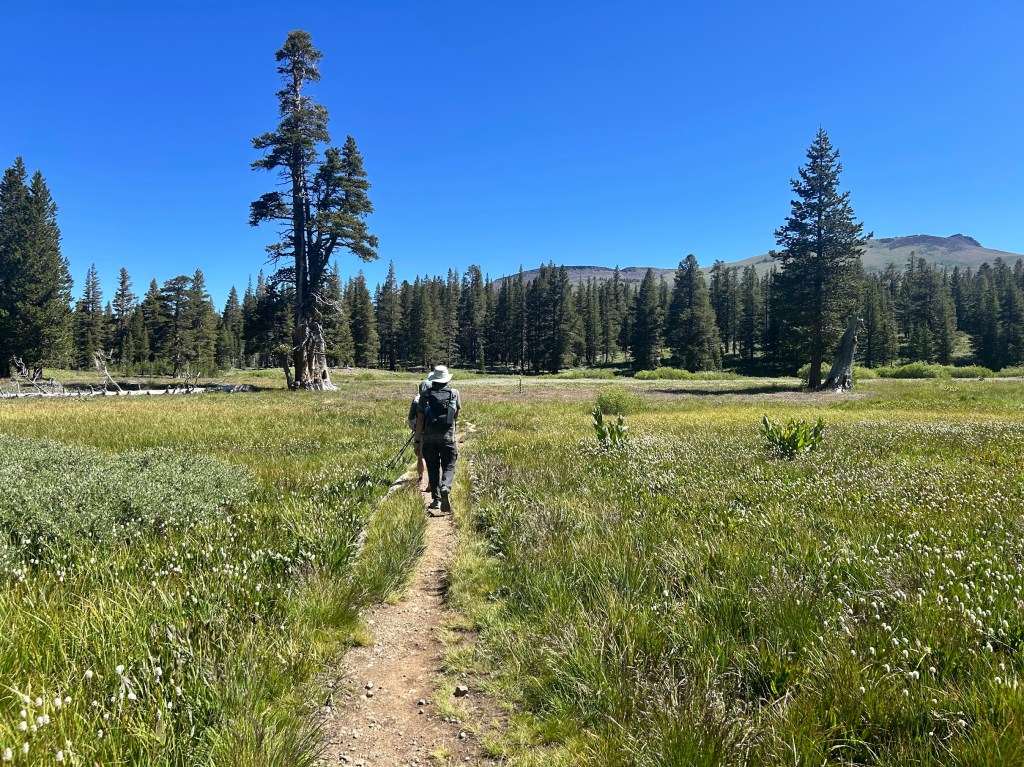
As of now, they are planning on starting at Sonora Pass on the PCT (just north of Yosemite) and going Nobo for a week or so, which would put me in perfect position to do about 75 miles and link up with my 2024 section, near South Lake Tahoe.

Let the chips fall where they may and let’s do another round of the PCT!

Let’s try something different

For the past couple of years I have taken a week in the summer to do a section of the PCT out west. This year, I’m going to change it up a bit.

Some of you may remember my buddy Stix from my 2023 PCT hike. He started the Appalachian Trail on Friday and I’ve decided I’m going to meet him in Virginia and do a week long section with him in Shenandoah National Park.

Right now we are shooting to meet up around May 1st and do about 70 miles together. It will give him a chance to slow down and enjoy the scenery while I build up to around 15 miles a day.

I’ve started endurance training and am excited to get back on the AT, which is responsible for my love of long trails. Let’s go!

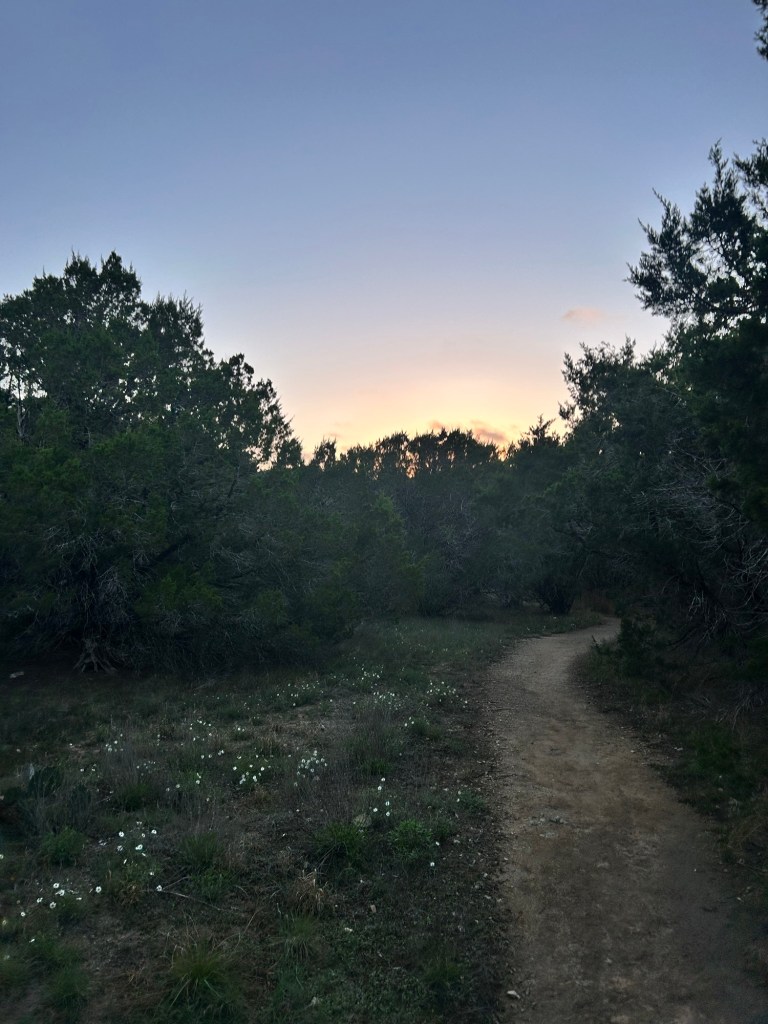
Sunrise on trail in Steiner Ranch
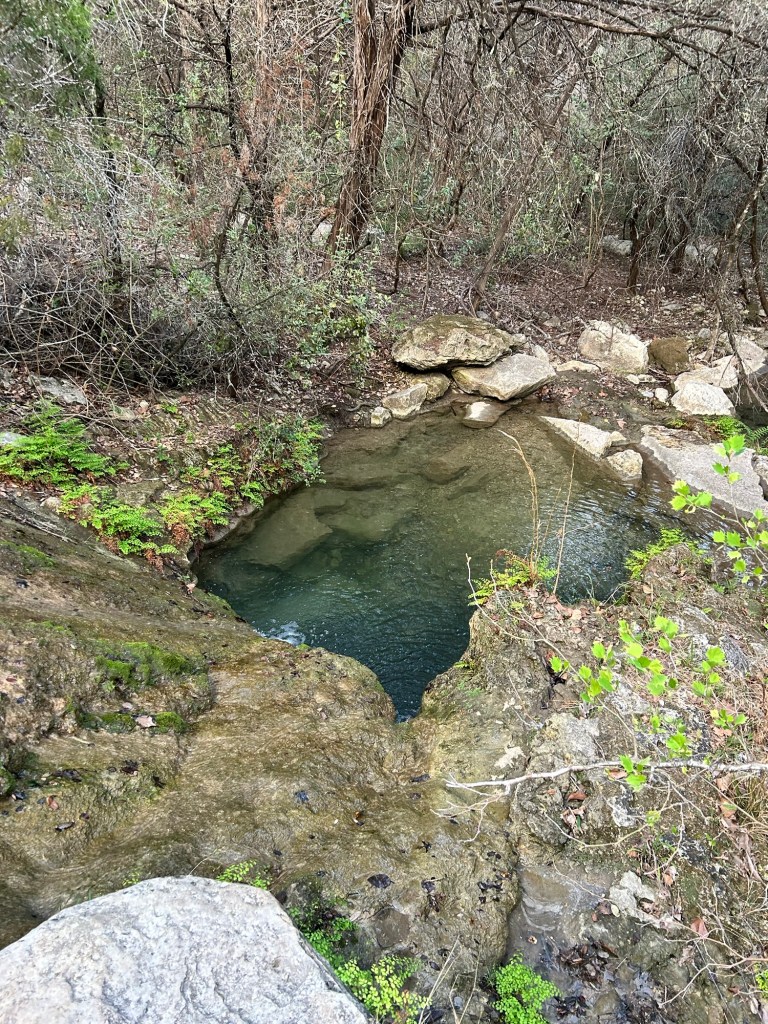
Swimming hole!
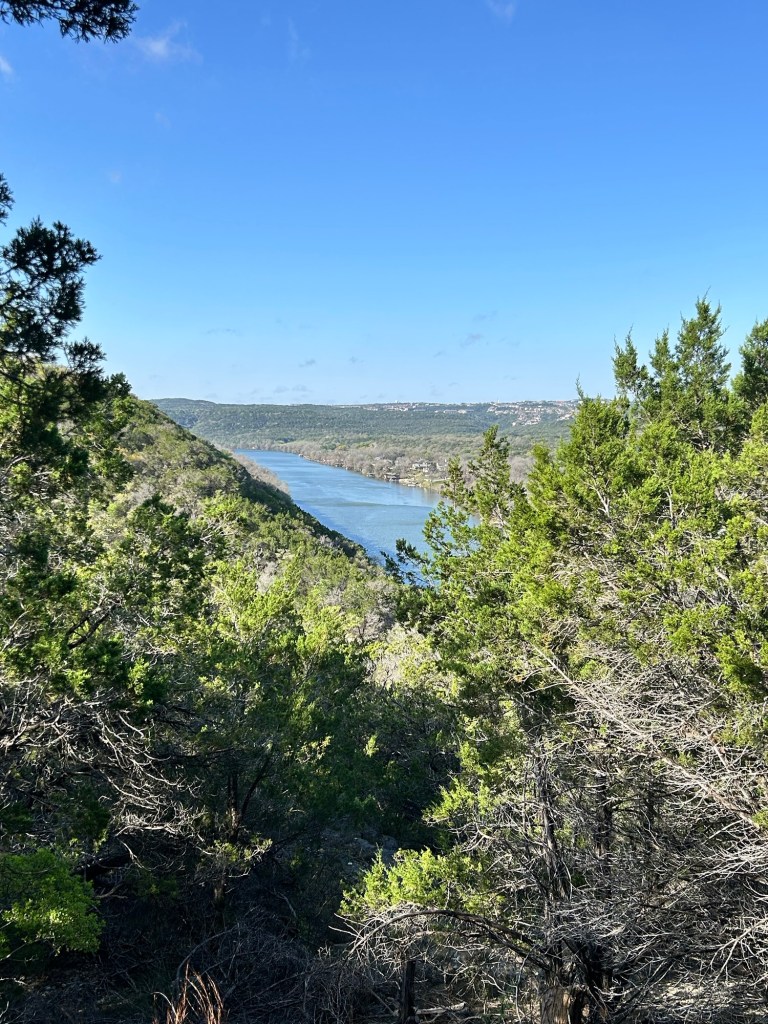
Colorado River

PCT Section Hike 2025 – Day 3 Southbound – Lolo Pass to Ramona Falls 8/19/25

Tuesday, August 19, 2025

10 miles – PCT mile 2117.3 to 2110 + 3.5 mile hike out

Well, sometimes shit happens. I woke up on day 3 and the IT band on my left hip was super sore. This is the other first I was talking about earlier. I’ve never had that pain whilst hiking before. Pain is of course inevitable, but this seemed different. Here’s the video I made when I got back to Portland. Afterwards will be photos from Day 3 of my hike.

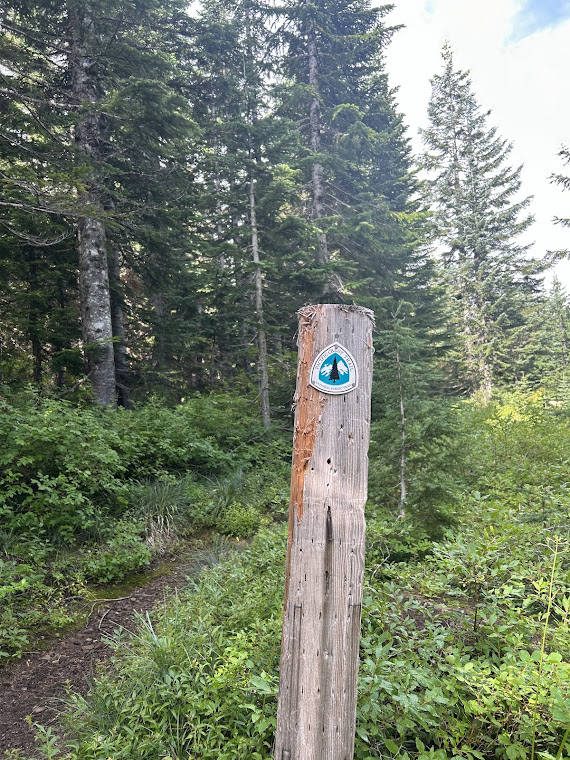
The day began with a big climb and my first Mt Hood view!

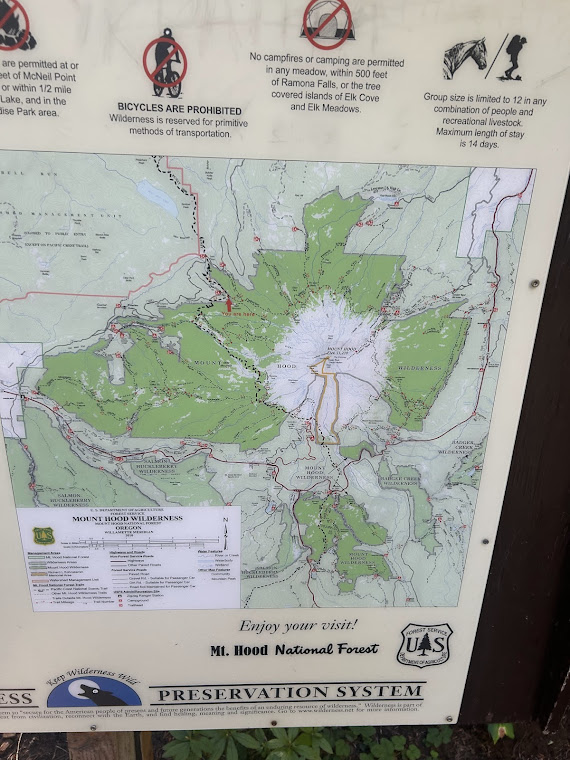
Mt Hood Wilderness map
Trail – look at the edges of the trail and you can see the holes from all the hiking poles that most hikers walk with

I descended down another 1000 feet to Muddy Creek and crossed on a log. Right after this was when I started to realize my hip was getting worse.

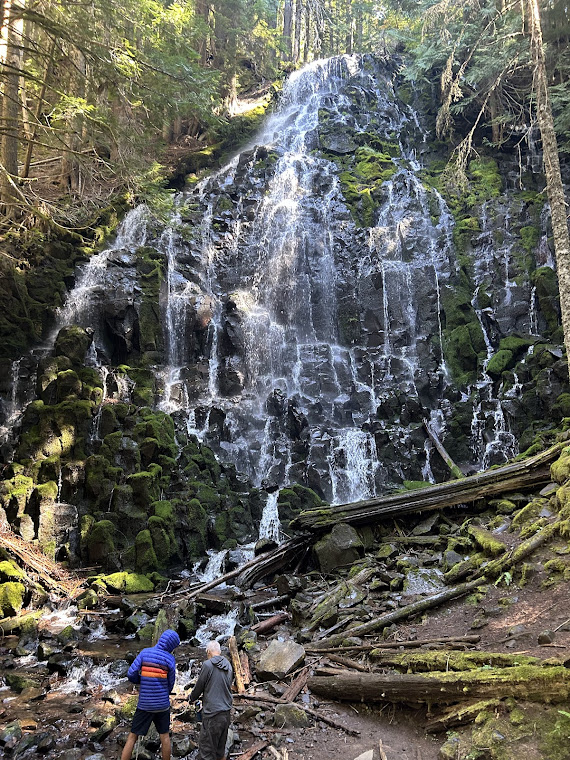
The trail to Ramona Falls was slightly uphill, but my hip made it feel much steeper. It started to become apparent that I may need to bail out. Ramona Falls was beautiful though.

There were plenty of day hikers around. I scoped out who I thought might be a good mark to “yogi” a ride from (thru hiker term) and found Mike and his dog Rogue. He was with another couple as well and I could tell they were good people. The art of yogi-ing a ride is subtle. I started by asking how far it was back to the parking lot and if there was any cell signal there for me to call an Uber. I then explained my predicament and Mike volunteered to take me back to Portland, as his drive brought him near the airport anyway. Success!

Thanks Mike!
and his pup Rogue!
Sadly, parking lot would be my destination

I was about 11 miles short of my intended stopping point of Timberline Lodge on Mt. Hood, but I’ll come back another year. I think I may have undertrained a bit for this trip, compared to my hikes in the previous years and perhaps I also went too fast out of the gate. Regardless, it was a great hike and I got to check some more miles off my ultimate goal of finishing the entire PCT over the coming decades.

PCT Section Hike 2025 – Day 2 Southbound – Wahtum Lake to Lolo Pass 8/18/25

Monday, August 18, 2025

16 miles – PCT mile 2133.4 to 2117.3

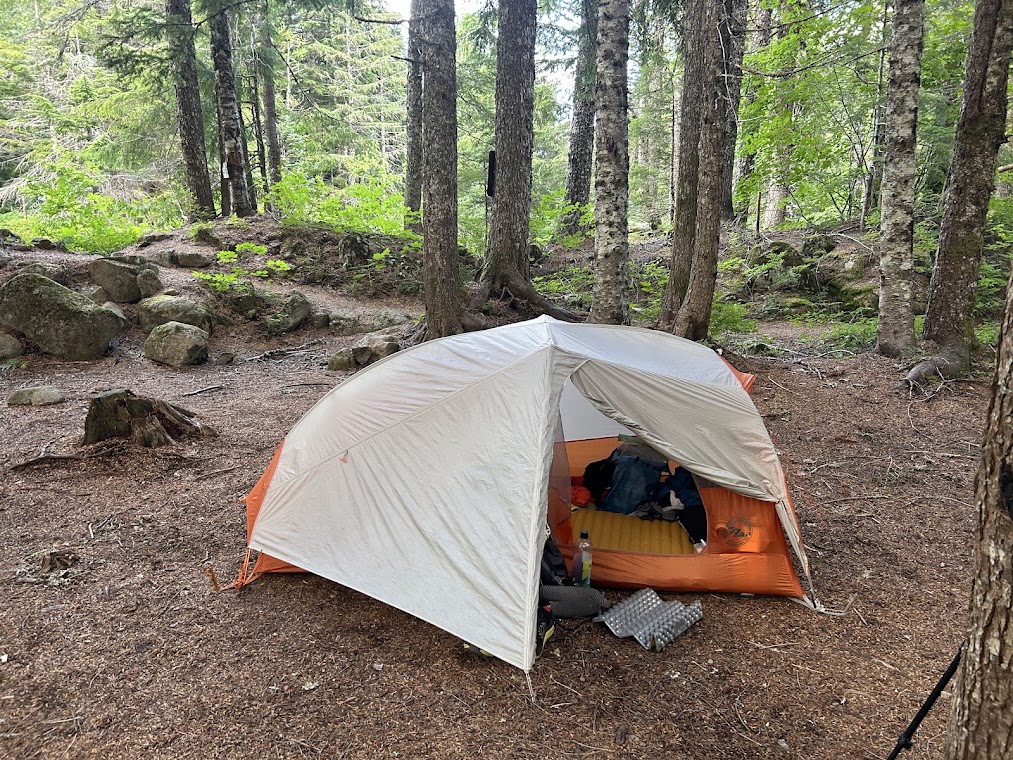
I woke up in the fog and cold. I had expected lows in the 50s, but it was certainly in the 40s at least. I’ve got my sleep system down though, so I was nice and toasty in my tent and got a bit of a later start, around 9:30am.

I got to the spot where I was originally going to camp (before deciding to pivot to Wahtum Lake) and there were some beautiful views.

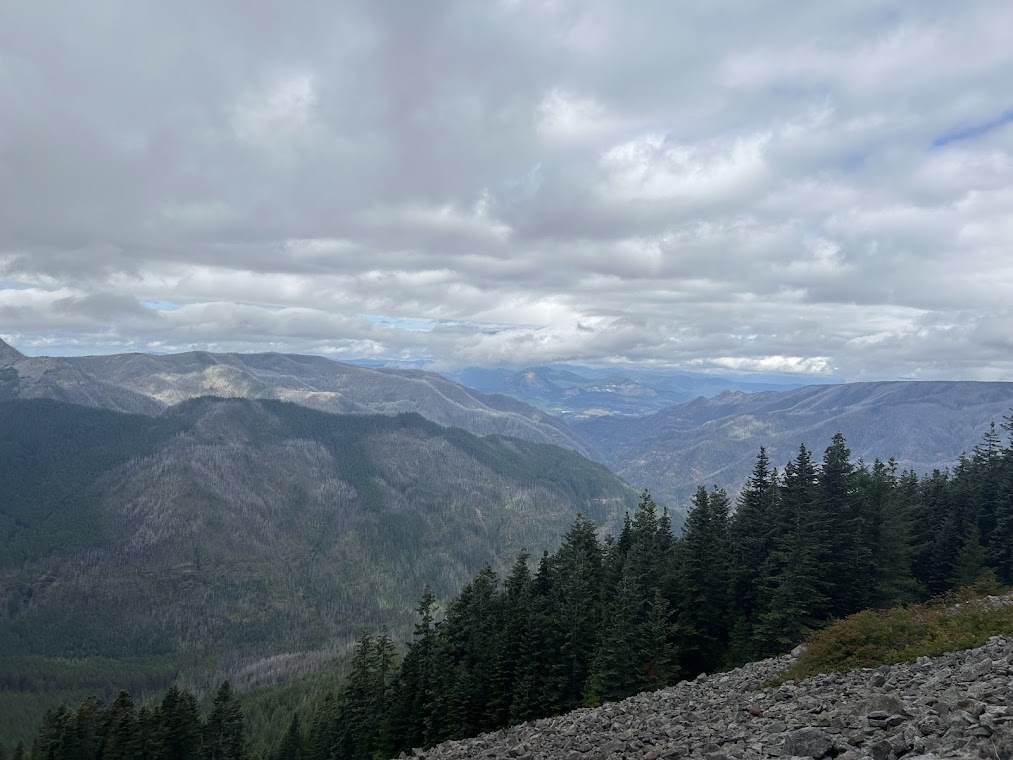
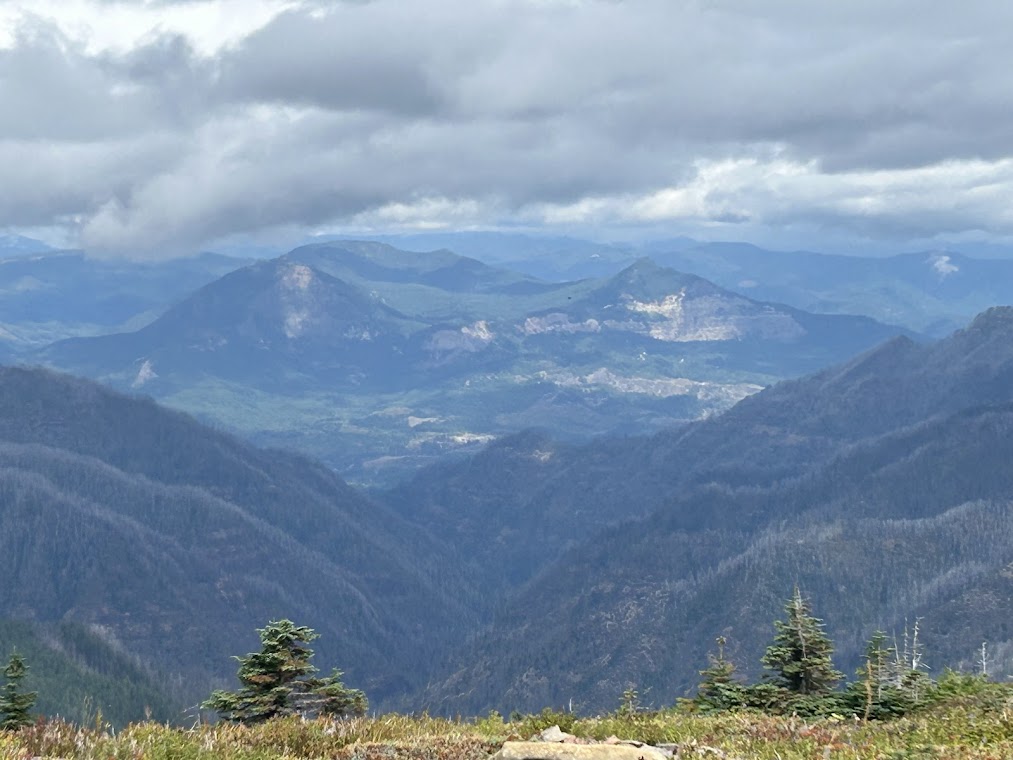
Most of today would be overcast and foggy. No mountain views, but pretty hiking and some amazing trail magic, both human and nature-made.

The trail provides is a phrase you often hear out there. It is amazingly true.

Spy and LP to the rescue
Foggy trail
Mt Hood in clouds

One thing I learned was that Pikas actually live down at this altitude. I thought they were always over 10,000 feet, but I saw and heard several among the rocks down here around 6,000 feet.

Trail through scree – Pikas abound

High voltage power lines are always crazy to me on trail.

I again pushed a little further than I was planning on, but it was mostly downhill, so I ended at Lolo Pass about 16 miles in.

PCT Section Hike 2025 – Day 1 Southbound – Cascade Locks to Wahtum Lake 8/17/25

Sunday, August 17, 2025

14 miles – PCT mile 2150 – 2133.4 (using Eagle Creek alternate)

Here’s an overview of my full journey, minus the last day. I brought the wrong cord to charge my Garmin InReach, which is my sattelite beacon that tracks my progress, so the last day wasn’t tracked. I actually ended at the Sandy River and Ramona Falls, for a total of just about 40 miles.

I woke up around 7am, packed up, said my goodbyes, and headed towards the Bridge of the Gods. Instead of heading up the actual PCT there, I continued west under the bridge on the historic Columbia River Highway State Trail. This would follow the highway to the Eagle Creek Trail Head, where I would start heading into the woods.

Mural under the Bridge of the Gods

At the trail head there is a salmon hatchery that I found to be pretty cool.

I started up the trail and soon came to the first of several waterfalls. This is Punchbowl Falls.

More falls – didn’t know the name of this one.

The big highlight of this trail is Tunnel Falls. This was spectacular and is the main reason hikers do this alternate instead of the actual PCT.

After Tunnel Falls, I continued on and found a place to eat lunch and soak my feet in the creek.

Cliffside trail
Beautiful

It was still early in the day, so I decided to try and go a little further than planned to get a jump on the miles. This ended up being harder than anticipated.

I also remembered I had an app called Dual Gram that allows you to record from both sides of the phone, which is kinda cool.

As I continued up, I looked at the topo map and realized the trail I was originally going to take to meet up with the PCT basically went straight up the mountain with no switchbacks. There was also a question of water once I reached the top. There was another option, which I explain in this video.

This was a good decision in the end. The trail was much nicer and I got to end the day at a lake, which afforded me a brief (but cold) swim. I was also chafing really bad on my thighs, which was the first time in my hiking career that had happened. Luckily, I travel with Aquaphor, which would help me heal up quickly. There would be some other firsts on this trip as well, which I will expound upon later.

I got into camp with about an hour to spare before the sun went down and I was beat. I had my own spot on the edge of the lake and fell asleep quickly.

PCT Days in Cascade Locks

Fri-Sat, Aug 15-16, 2025

As I stepped off the train from the Portland airport, I immediately spied one of my people. You can spot the hiker trash a mile away. The grit and grime of their clothes, the backpacks, the PCT emblem clipped to their back if they are thru-hiking; the hiker uniform is unique.

The weather was typical PNW: chilly, foggy, and humid, with the smell of pines in the air. I joined my fellow hikers on the bus heading to the east on Hwy 84 along the Columbia River. I sat next to a hiker named Whiskey, who had gotten hurt in the Sierra and was just following his still-hiking buddies around at trail towns. When we got off in Cascade Locks 45 minutes later, he astutely asked, “well, now what?”. None of us really knew where to go, but we quickly found our way to the campground and park at Thunder Island.

I signed up to volunteer for the weekend, so I got to camp for free on Friday and Saturday nights. My volunteer role was to help out with running the sound, which basically consisted of turning the music down whenever someone needed to make an announcement on the microphone about the various events and gear demos throughout the day. The rest of the time I got to wander around and hang out with hikers and generally have a good time.

After setting up camp, I walked around the small town of Cascade Locks to get the lay of the land. The historic and iconic Bridge of the Gods spans the Columbia River here and is where the trail crosses from Oregon into Washington.

Cascade Locks is tiny and walkable and full of hikers.

Bridge of the Gods toll booth – hikers walk across here, along with traffic

Overnight on Friday it rained and we all woke up a bit soggy, but ready for another full day of gear, friends, and fun.

At the end of the day there was a raffle where thousands of dollars of gear were given away. I didn’t get any, but it worked out because I wouldn’t have had anywhere to keep it anyway, since I was hitting the trail the next morning.

Raffle
Some of my internet hiking friends – The Codgers

The weather on Saturday night was much better and we all settled in for a nice sunset and the end of a great weekend. I hit the trail the next morning.

On the way to Oregon

Friday, August 15, 2025

I’m at the Austin airport very early this morning, waiting to board my flight to Portland.

Breakfast

I was able to fit all of my gear (barely) into my Zpacks flight case, so my whole system is self-contained and I don’t have to worry about stashing a suitcase somewhere while I hike.

Everything fit!

It does feel odd not having a carry on, other than my GG fanny pack, another newer piece of gear that is quickly becoming a favorite.

I spent the last two days going over gear, food, and logistics.

Obligatory gear layout shot
Food from home – the rest I will buy in Oregon

I also permethrin’d my clothes, as it is most certainly mosquito season where I’m going. I hang them in the garage and spray them and let them dry for a few hours.

Once I get to Portland, I’m taking a bus from the airport east along the Columbia River to Cascade Locks. This is where PCT Days is held and I’ll camp here for two nights before starting my hike on Sunday morning.

It’s supposed to rain a lot this weekend, but Sunday the sun comes out. Perfect timing, I hope. Let’s do it!

Training for Oregon – Part One

Saturday, July 26, 2025

10.2 miles – Lake Georgetown – Cedar Breaks Trail Head

I went out to one of my favorite training spots near Austin, the loop around Lake Georgetown, early on Saturday morning. I’ve done a few 5 mile hikes with full pack earlier this summer, but am planning on a 10+ miler for the remaining 3 weekends before my hike. This isn’t the most vigorous training schedule, but I’m hoping it should be enough. I’m also getting my peloton rides in and core and other strength training as well.

We’ve had a relatively cool summer so far, due mainly to the flooding over the July 4th weekend and the rains in the weeks after. There were many deaths and people displaced from those floods. The lakes are also mostly full, something that hasn’t happened in many years. As a result, the trail was also very overgrown for July and had plenty of places where I had to contort and squeeze through, while getting scratched up by branches and cacti in the process.

I went just over 10 miles from Cedar Breaks trail head to just past the Cedar Hollow campground, took a break to eat and hydrate, then doubled back. The heat was fine until around 11am, as usual, and the last mile I really started to feel it. Even with a high of only 92, it definitely felt hotter and I was able to break out my umbrella (one of my favorite pieces of gear) to get some shade as I hiked.

And as always, the longhorns were out and about and had even added a donkey to the group since I was last out here.

Map